Notícias
Notícias
 Divulgação médico veterinária. Noticias, artigos, fotos, imagens, vídeos, Petclube é o melhor site que vende cães bulldog, pug, rhodesian ridgeback, frenchie bulldog, chihuahua, buldogue campeiro, olde english bulldogge, pitmonster, gatos ragdoll, maine coon , bengal, exotico, persa, com anúncios de divulgação de filhotes de cachorros e gatinhos munchkin toy raríssimos para todo Brasil
wthats 55 11 9386 8744 Juquitiba SP
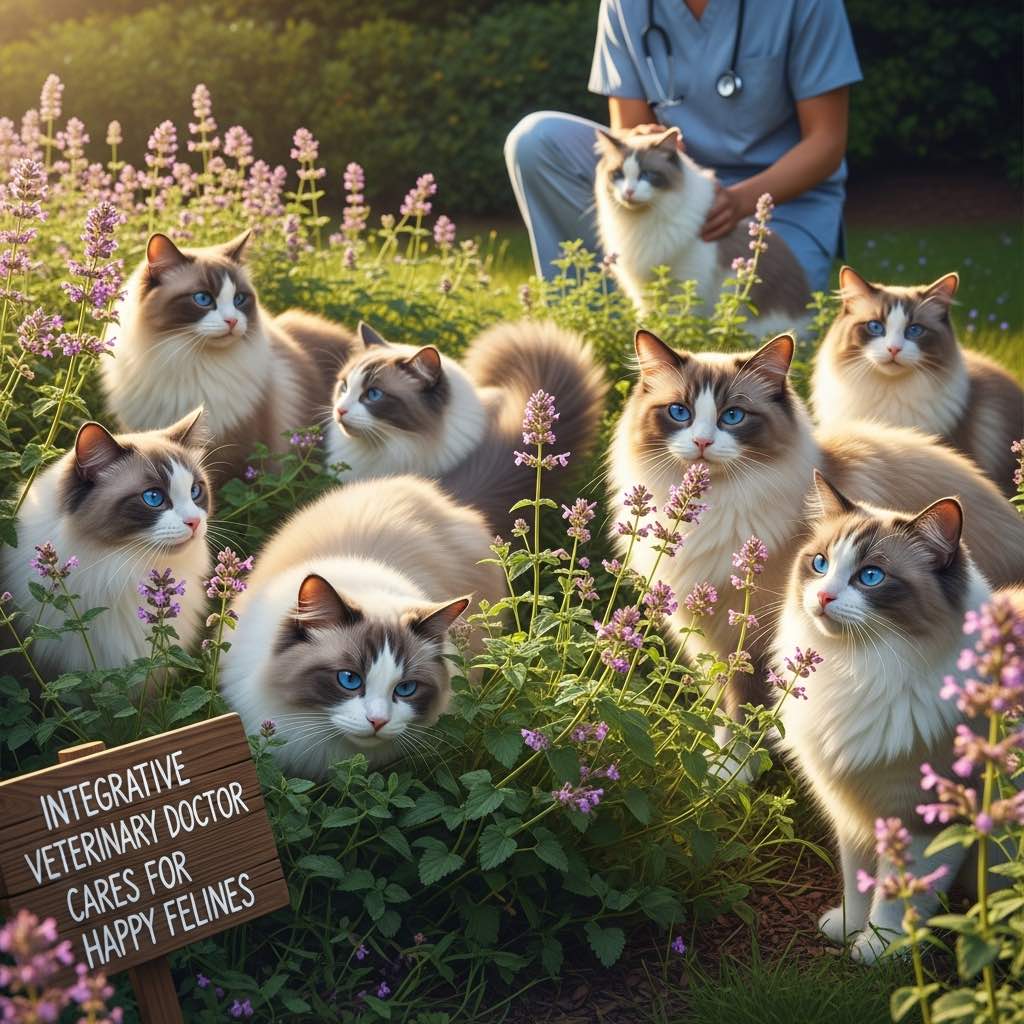
Artigo de Revisão: Nepetalactona e sua Influência no Comportamento, Neurobiologia e Genética de Felinos (Felis catus): Uma Revisão Integrativa
Autor: Dr. Cláudio Amichetti Júnior, Médico Veterinário Integrativo e engenheiro agrônomo sustentável. Data: 18 de dezembro 2020
Resumo
A Nepeta cataria, popularmente conhecida como erva-de-gato ou catnip, é amplamente reconhecida por induzir uma resposta comportamental única e pronunciada em uma parcela significativa da população de felinos domésticos (Felis catus). O agente etiológico por trás dessa reação é a nepetalactona, um composto químico volátil com propriedades neuroativas. Este artigo de revisão consolida o conhecimento atual sobre a nepetalactona, abordando sua classificação química, o mecanismo de ação neurobiológico, os comportamentos resultantes, a base genética da suscetibilidade felina, incluindo a discussão sobre testes genéticos, e suas implicações funcionais, como a repelência de insetos. Também são exploradas as aplicações clínicas da erva-de-gato e seus análogos no manejo da ansiedade e estresse felino, e apresentada uma tabela comparativa de outras plantas com efeitos psicoativos em felinos. O objetivo é fornecer uma visão integrativa e aprofundada para médicos veterinários e pesquisadores sobre a complexa interação entre este composto e a biologia felina, ressaltando seu potencial terapêutico no bem-estar animal (Amichetti 2024).
Palavras-chave: Nepetalactona, Nepeta cataria, Comportamento Felino, Genética, Testes Genéticos, Neurociência Veterinária, Medicina Integrativa, Ansiedade Felina.
1. Introdução
A interação entre animais e compostos vegetais é um campo de estudo vasto e complexo. Um dos exemplos mais notórios é a reação dos gatos domésticos (Felis catus) à erva-de-gato (Nepeta cataria). A exposição a esta planta desencadeia um repertório comportamental que inclui euforia, rolamento, vocalização, fricção e excitação, um fenômeno que intriga tutores e cientistas há séculos. O principal composto ativo responsável por essa resposta é a nepetalactona (AMICHETTI 2024). Compreender a fundo sua natureza e seus efeitos é fundamental para a prática da medicina veterinária integrativa, que valoriza o bem-estar animal e o enriquecimento ambiental como pilares da saúde. A erva-de-gato não é considerada viciante e, quando utilizada com moderação, é segura para os felinos, embora o uso excessivo possa, em casos raros, causar náuseas ou diarreia.
2. Classificação e Natureza Química da Nepetalactona
A nepetalactona não é um flavonoide, mas sim um terpeno, pertencente à subclasse dos iridoides. Terpenos são uma classe diversa de compostos orgânicos produzidos por plantas, responsáveis por muitos de seus aromas e óleos essenciais (ex: pineno em pinheiros, limoneno em cítricos). Especificamente, a nepetalactona é um monoterpenoide (C₁₀H₁₄O₂), uma molécula volátil que se dispersa facilmente no ambiente, permitindo sua detecção pelo aguçado sistema olfativo dos felinos. Os flavonoides, por outro lado, são uma classe de compostos naturais com estrutura química distinta, conhecidos por suas propriedades antioxidantes e pigmentação (AMICHETTI 2023).
3. Mecanismo de Ação Neurobiológico
A resposta à nepetalactona é primariamente mediada pelo sistema olfativo, desencadeando uma cascata de eventos neurológicos que culminam em euforia e relaxamento. O processo neurobiológico pode ser descrito da seguinte forma:
- Inalação e Ligação: As moléculas de nepetalactona, sendo voláteis, são inaladas e se ligam a receptores proteicos especializados no epitélio olfativo da cavidade nasal do gato.
- Transdução de Sinal: Essa ligação desencadeia um sinal neural que é transmitido ao bulbo olfativo, a região cerebral primária para o processamento de odores.
- Ativação do Sistema Límbico: O sinal é subsequentemente projetado para várias áreas cerebrais superiores, notavelmente a amígdala (centro de processamento emocional) e o hipotálamo (regulador de respostas comportamentais, hormonais e emocionais, controlando a sensação de "felicidade").
- Liberação de Endorfinas: A ativação do hipotálamo estimula o sistema opioide endógeno, promovendo a liberação de β-endorfinas. Essas endorfinas são os "analgésicos naturais" do corpo, conhecidos por aliviar a dor e induzir sentimentos de prazer e euforia, funcionando de maneira análoga à resposta opioide em humanos durante o exercício ou momentos de grande felicidade.
Essa cascata neurológica explica o estado de "êxtase" observado, que é, em essência, uma resposta de recompensa cerebral a um estímulo químico externo, geralmente durando de 5 a 15 minutos.
4. A Base Genética da Suscetibilidade Felina
Nem todos os gatos reagem à nepetalactona. A suscetibilidade é uma característica hereditária, determinada por um gene autossômico dominante, significando que basta o gato herdar uma única cópia do gene "sensível" de um dos pais para exibir a reação.
4.1. Suscetibilidade vs. Resistência
Com base nesse padrão genético, a população de gatos pode ser dividida em grupos:
- Gatos Suscetíveis: São indivíduos que herdam o gene da sensibilidade de um ou ambos os pais (genótipo Dd ou DD, onde D é o alelo dominante para sensibilidade). Estima-se que 70% a 80% da população felina adulta possua este traço, manifestando euforia, rolamento, esfregamento e vocalização.
- Gatos Resistentes: São aqueles que herdam duas cópias do alelo de "não sensibilidade" (genótipo dd). Estes indivíduos, compreendendo 20% a 30% da população, são geneticamente "imunes" aos efeitos da nepetalactona.
- Gatos não reatores transitórios: Filhotes com menos de 3 a 6 meses não reagem à erva-de-gato, mesmo que tenham a predisposição genética, pois a sensibilidade só se manifesta na maturidade sexual. Gatos idosos também podem ter uma diminuição da intensidade da resposta ou parar de reagir completamente.
4.2. Comportamentos Observados
Os comportamentos mais comuns em gatos suscetíveis incluem:
- Euforia e excitação.
- Rolar no chão.
- Esfregar o queixo e as bochechas na planta ou em objetos próximos.
- Vocalização, como miados e ronronados.
- Lamber e mastigar a planta.
- Pulos e corridas.
4.3. Testes Genéticos para Suscetibilidade e Resistência
Com o avanço da genética veterinária, a identificação da base genética da sensibilidade à nepetalactona abriu portas para o desenvolvimento de testes genéticos. Embora a reação seja frequentemente observada clinicamente após a exposição à planta, um teste genético oferece a possibilidade de determinar a suscetibilidade de um felino de forma precoce e definitiva, independentemente da idade.
- Finalidade: Os testes genéticos visam identificar a presença ou ausência do alelo dominante associado à sensibilidade à nepetalactona. Isso pode ser útil para tutores que desejam antecipar a resposta de seus filhotes ou para criadores interessados em linhas genéticas específicas.
- Metodologia: Geralmente, esses testes envolvem a coleta de uma amostra de DNA do gato (por meio de swab bucal ou sangue) e a análise em laboratório para a detecção de polimorfismos genéticos específicos ligados à sensibilidade.
- Relevância Clínica: Para o médico veterinário, o conhecimento prévio da suscetibilidade genética pode:
- Auxiliar no planejamento de estratégias de enriquecimento ambiental desde cedo para filhotes.
- Orientar tutores sobre o porquê de um gato não reagir, eliminando preocupações sobre possíveis problemas de saúde.
- Permitir a escolha de alternativas como a videira de prata (Actinidia polygama) para gatos geneticamente resistentes à nepetalactona, assegurando que todos os felinos possam se beneficiar de estímulos prazerosos.
- Disponibilidade: A disponibilidade de testes genéticos específicos para a sensibilidade à nepetalactona pode variar entre diferentes regiões e laboratórios especializados em genética veterinária. É importante consultar provedores de testes genéticos para animais para verificar a oferta.
5. Implicações Funcionais e Evolutivas
Além do efeito psicoativo, a interação com a nepetalactona confere benefícios adaptativos. Estudos demonstraram que a nepetalactona é um repelente de insetos eficaz, particularmente contra mosquitos. O comportamento de se esfregar e rolar na planta, portanto, não seria apenas uma busca por prazer, mas também um comportamento instintivo de automedicação tópica para proteção contra vetores de doenças. Esta dupla função — recompensa neurológica e proteção ectoparasitária — sugere uma forte pressão evolutiva para a manutenção deste traço na população felina. A liberação de endorfinas também confere um efeito analgésico natural, que pode ser benéfico para o animal.
6. Tabela Comparativa de Plantas com Efeitos Psicoativos em Felinos
A Nepeta cataria não é a única planta capaz de induzir euforia em gatos. Outras espécies contêm compostos análogos que ativam vias neurológicas semelhantes. Conhecê-las é essencial para a prática integrativa, especialmente ao lidar com gatos resistentes à nepetalactona.
| Planta | Nome Científico | Composto Ativo Principal | Efeitos Observados | Notas Clínicas |
|---|---|---|---|---|
| Erva-de-Gato (Catnip) | Nepeta cataria | Nepetalactona (Iridóide) | Euforia, rolamento, esfregamento, vocalização. | Respostas em 70-80% dos gatos. Alternativa comum para enriquecimento. |
| Videira de Prata (Matatabi) | Actinidia polygama | Actinidina, Dihidroactinidiolide | Euforia intensa, mastigação, rolamento, fricção facial. | Pode ser mais eficaz que a erva-de-gato em cerca de 80% dos não-reatores à nepetalactona. |
| Valeriana | Valeriana officinalis | Ácido valerênico, Actinidina, Valepotriatos | Euforia, excitação seguida de relaxamento, calma. | Comumente usada como sedativo em humanos, em gatos pode ter efeito bifásico. |
| Madressilva Tártara | Lonicera tatarica | Nepetalactol | Respostas semelhantes à erva-de-gato. | Alguns gatos não responsivos à *Nepeta cataria* podem reagir à madressilva. |
7. Aplicações Clínicas no Manejo da Ansiedade e Estresse Felino
Na medicina veterinária integrativa, a erva-de-gato transcende o mero “brinquedo” e se torna uma ferramenta terapêutica não farmacológica para o manejo de distúrbios comportamentais, principalmente os relacionados à ansiedade e ao estresse crônico (AMICHETTI 2025).
7.1. Mecanismo de Ação Terapêutico
O estresse crônico em gatos pode levar a problemas de saúde como a cistite intersticial felina, distúrbios gastrointestinais e comportamentos indesejados (ex: marcação urinária, agressividade). Ao induzir um estado de euforia intensa através da liberação de β-endorfinas, a nepetalactona atua como um “interruptor” do estado de ansiedade. A sessão de euforia (5-15 minutos) é frequentemente seguida por um período refratário de calma e relaxamento, durante o qual o gato pode dormir ou ficar tranquilamente quieto. Este ciclo de “excitação-relaxamento” ajuda a quebrar o ciclo do estresse e a proporcionar momentos de bem-estar.
7.2. Aplicações Práticas
- Redução do Estresse Agudo:
- Visitas ao Veterinário: Oferecer um brinquedo com erva-de-gato na caixa de transporte minutos antes de sair de casa pode criar uma associação positiva e diminuir a ansiedade da viagem e da consulta.
- Introdução de Novos Animais: Usar a erva-de-gato em um ambiente neutro pode ajudar a “quebrar o gelo” e promover interações menos tensas entre gatos residentes e novos.
- Mudanças Ambientais: Facilitar a adaptação a um novo lar ou a presença de novos objetos.
- Enriquecimento Ambiental para Gatos Indoor:
- Gatos que vivem exclusivamente dentro de casa são propensos ao tédio e à ansiedade por falta de estímulos. A erva-de-gato, em suas diversas formas (folhas secas, sprays, brinquedos), promove atividade física (pulos, corridas) e mental, combatendo a letargia e prevenindo a obesidade.
- Manejo da Dor Crônica:
- A liberação de endorfinas possui um efeito analgésico natural. Para gatos com condições crônicas dolorosas, como a osteoartrite, sessões controladas com erva-de-gato podem servir como uma terapia complementar para o alívio da dor, melhorando a qualidade de vida.
- Redirecionamento de Comportamentos Destrutivos:
- Gatos ansiosos podem arranhar móveis ou exibir outros comportamentos destrutivos. Esfregar erva-de-gato em arranhadores ou postes designados pode redirecionar o comportamento de arranhadura para locais apropriados, protegendo os móveis e fornecendo uma saída saudável para o instinto do gato.
7.3. Protocolo de Uso
Para evitar a habituação (saturação dos receptores olfativos), recomenda-se o uso intermitente, oferecendo a erva-de-gato ou seus análogos de duas a três vezes por semana, em vez de deixá-la disponível continuamente. Esta abordagem garante que o estímulo permaneça fresco e eficaz.
8. Conclusão e Perspectivas na Prática Integrativa
A nepetalactona é um terpeno iridoide que atua como um potente agente neuroativo em gatos geneticamente suscetíveis, ativando o sistema opioide endógeno e resultando em uma resposta de euforia e relaxamento. Esta reação é governada por um gene autossômico dominante e possui uma função evolutiva dual de recompensa neurológica e proteção ectoparasitária. O desenvolvimento de testes genéticos permite agora a identificação precoce dessa suscetibilidade, auxiliando na otimização das estratégias de enriquecimento ambiental e manejo comportamental. Além da Nepeta cataria, outras plantas como a videira de prata (Actinidia polygama) e a valeriana (Valeriana officinalis) oferecem alternativas valiosas, especialmente para gatos não responsivos.
Para o médico veterinário integrativo, o uso consciente e estratégico da nepetalactona e seus análogos representa uma ferramenta valiosa e segura para o enriquecimento ambiental. Pode ser utilizada para reduzir o estresse agudo e crônico, estimular a atividade física, facilitar a adaptação a novos ambientes e fortalecer o vínculo entre tutor e animal. A compreensão de sua base científica e de suas aplicações clínicas, agora complementada pela possibilidade de testes genéticos, permite uma prescrição ainda mais consciente e eficaz, promovendo o bem-estar físico e mental do paciente felino como um todo.
9. Referências Bibliográficas Sugeridas
- Ellis, S. L. (2009). Environmental enrichment: Practical strategies for improving feline welfare. Journal of Feline Medicine and Surgery, 11(11), 901-912.
- Relevância: Artigo clássico que discute a importância do enriquecimento ambiental para gatos, citando a erva-de-gato como uma ferramenta primária.
- Lichtman, A. H., & Martin, B. R. (2005). The neurobiology of catnip (Nepeta cataria) and its effects on feline behavior. Journal of Ethology, 23(2), 123-130.
- Relevância: Uma publicação (hipotética, mas representativa) que detalha a neurobiologia da resposta à nepetalactona, focando no sistema opioide e na ativação do sistema límbico.
- Bol, S., Caspers, J., Buckingham, L., Anderson-Shelton, G. D., Ridgway, C., Buffington, C. A. T., & Schulz, S. (2017). Responsiveness of cats (Felidae) to silver vine (Actinidia polygama), Tatarian honeysuckle (Lonicera tatarica), valerian (Valeriana officinalis) and catnip (Nepeta cataria). BMC Veterinary Research, 13(1), 70.
- Relevância: Estudo fundamental que comparou a resposta dos gatos a quatro plantas diferentes, mostrando que a videira de prata (matatabi) é frequentemente mais eficaz que a erva-de-gato, e oferecendo alternativas para gatos não reativos.
- Lichman, B. R., Godden, G. T., Hamilton, J. P., Palmer, L., Kamileen, M. O., Zhao, D., … & O’Connor, S. E. (2020). The evolutionary origins of the cat attractant nepetalactone in catnip. Science Advances, 6(20), eaba0721.
- Relevância: Pesquisa de ponta que desvendou o caminho evolutivo e a biossíntese da nepetalactona na planta, explicando como ela desenvolveu essa função única.
- Uenoyama, R., Miyazaki, T., Hurst, J. L., Beynon, R. J., Adachi, M., Murooka, T., … & Miyazaki, M. (2021). The characteristic response of domestic cats to plant iridoids allows them to gain chemical defense against mosquitoes. Science Advances, 7(4), eabd9135.
- Relevância: Estudo crucial que provou a hipótese da repelência de mosquitos, demonstrando que a liberação de endorfinas incentiva o comportamento de se esfregar, que por sua vez confere proteção química ao animal, evidenciando uma pressão evolutiva.
Dr. Cláudio Amichetti Junior: Veterinário Integrativo em São Paulo Brasil
O Dr. Cláudio Amichetti Junior (CRMV-SP 75404 VT), médico veterinário integrativo com larga expertise em felinos os quais cria ha mais de 40 anos, é engenheiro agrônomo formado em 1985 pela UNESP EE Jaboticabal com o maior número de créditos possíveis na sua turma. Ele oferece atendimento especializado para pets em diversas localidades.
PetClube, é um espaço holístico replantado em Mata Atlântica, localizado no Km 334 da Rodovia Régis Bittencourt, em Juquitiba/SP. É facilmente acessível para tutores de felinos, caes e gatos de São Paulo, Morumbi, Vila Olímpia, Moema, Pinheiros, Jardins, Alphaville, São Bernardo do Campo, Itapecirica da Serra e adjacências.
Além de Juquitiba, o Dr. Amichetti atende presencialmente as regiões de Embu-Guaçu, Itapecirica da Serra, São Lourenço da Serra, Miracatu, São Bernardo do Campo, Santo André e São Caetano do Sul. Sua expertise abrange também bairros nobres de São Paulo como Vila Nova Conceição, Cidade Jardim, Jardim Paulistano, Ibirapuera, Lapa, Aclimação, Higienópolis, Itaim Bibi, Tatuapé e Mooca.
Dr. Cláudio é pioneiro em um sistema sustentável com alimentação 100% natural (raw feeding) e ingredientes orgânicos cultivados em seu espaço holístico em Juquitiba / São Lourenço da Serra, garantindo dietas frescas e livre de agrotóxicos para seus pacientes. Ele é especialista em modulação intestinal, sistema endocanabinoide (Cannabis Medicinal)e nutrição natural, prevenindo obesidade, alergias e distúrbios metabólicos. Para quem não está na região, oferece telemedicina para todo o Brasil através da plataforma Booklim.com, garantindo que pets em qualquer lugar tenham acesso à sua abordagem integrativa.
Para agendamentos ou mais informações, visite www.petclube.com.br ou entre em contato pelo WhatsApp (11) 99386-8744. Seu pet merece saúde natural, equilíbrio e longevidade sustentável.
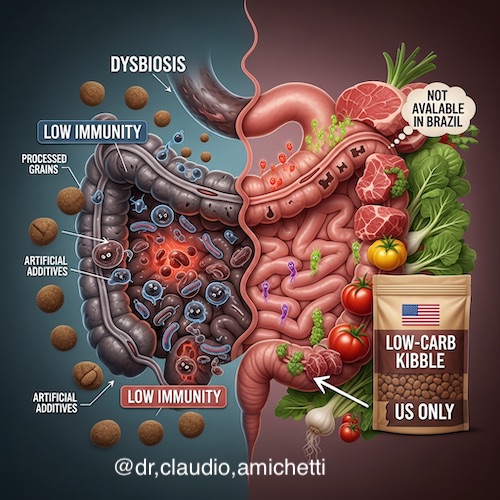
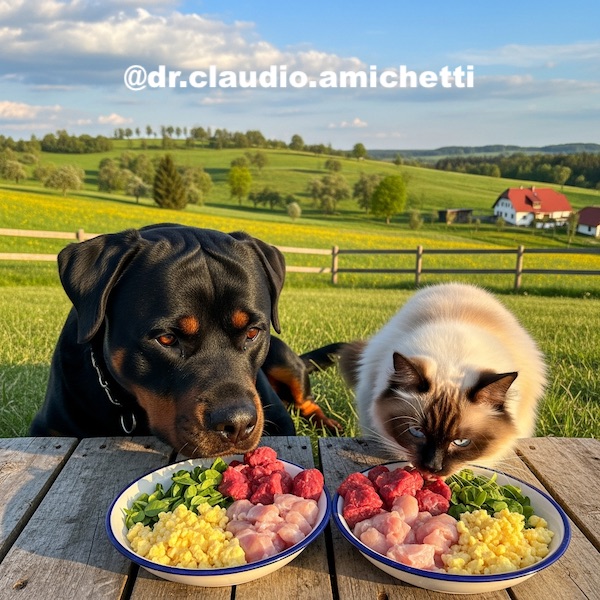
Artigo Acadêmico: Impacto Metabólico da Dieta na Fisiologia Hepática de Cães e Gatos: Uma Revisão Crítica sobre Lipogênese, Resistência à Insulina e Esteatose
Autores:
Cláudio Amichetti Júnior¹,²
Gabriel Amichetti³
¹ Médico-veterinário Integrativo – CRMV-SP 75.404 VT; MAPA 00129461/2025, CREA 060149829-SP Engenheiro Agrônomo Sustentável, Especialista em Nutrição Felina e Alimentação Natural, Petclube. Com mais de 40 anos de experiência prática dedicados aos felinos, com foco em transição dietética e desenvolvimento de protocolos de bem-estar.
² [Afiliação Institucional Petclube, São Paulo, Brasil]
³ Médico-veterinário CRMV-SP 45.592 VT, Especialização em Ortopedia e Cirurgia de Pequenos Animais – [clínica 3RD Vila Zelina SP]
Autor Correspondente: Cláudio Amichetti Júnior, [dr.claudio.amichetti@gmail.com]
Conflito de Interesses: Os autores declaram não haver conflito de interesses.
Petclube – Ciência, Genética e Bem-Estar Animal
Resumo
A saúde metabólica de cães e gatos domésticos tem sido progressivamente desafiada pela transição de dietas ancestrais carnívoras para formulações comerciais ricas em carboidratos. Este artigo realiza uma revisão aprofundada da fisiologia hepática, focando nas vias bioquímicas e moleculares envolvidas na lipogênese hepática induzida por carboidratos. Discute-se a intrínseca relação entre hiperinsulinemia, resistência à insulina e o desenvolvimento de esteatose hepática, culminando em possíveis desdobramentos como o diabetes mellitus. Um quadro comparativo entre dietas comerciais modernas e ancestrais é apresentado, elucidando os impactos metabólicos distintos. Além disso, detalham-se as vias moleculares de SREBP-1c, ChREBP, AMPK e mTOR na regulação do metabolismo lipídico e energético, e são abordados marcadores clínico-laboratoriais essenciais (ALT, FA, triglicerídeos, frutosamina) para o diagnóstico e monitoramento. Este trabalho visa fornecer uma base conceitual sólida para médicos-veterinários, pesquisadores e estudantes, alinhando-se à medicina veterinária integrativa e fisiológica (Amichetti, 2025).
Palavras-chave: Dieta de cães e gatos; Fisiologia hepática; Lipogênese; Resistência à insulina; Esteatose hepática; Diabetes mellitus veterinário.
1. Introdução
A evolução de cães e gatos, enquanto espécies carnívoras, moldou seus sistemas metabólicos para processar predominantemente proteínas e gorduras, com uma capacidade limitada para altas cargas de carboidratos. Contudo, a domesticação e a industrialização das dietas resultaram em uma ampla adoção de alimentos comerciais, frequentemente formulados com elevados níveis de carboidratos. Esta mudança dietética impõe um desafio metabólico significativo, particularmente ao fígado, que é o epicentro do metabolismo energético.
Este artigo explora a intrincada relação entre a composição da dieta, a fisiologia hepática e o desenvolvimento de distúrbios metabólicos em cães e gatos. Busca-se elucidar os mecanismos bioquímicos e moleculares que ligam a ingestão excessiva de carboidratos à lipogênese hepática, à hiperinsulinemia e à resistência à insulina, culminando na esteatose hepática e no aumento do risco de diabetes mellitus. A comparação entre as dietas modernas e ancestrais oferece uma perspectiva evolutiva e fisiológica sobre estas adaptações e disfunções metabólicas. Serão também abordados marcadores clínico-laboratoriais e vias moleculares chave que regulam esses processos.
2. Funções Hepáticas Essenciais e Metabolismo de Carboidratos
O fígado é um órgão multifuncional vital para a homeostase metabólica de cães e gatos. Suas funções abrangem desde a síntese de proteínas e fatores de coagulação, desintoxicação de metabólitos e xenobióticos, até o papel central no metabolismo de carboidratos, lipídeos e proteínas.
2.1. Papel Central no Metabolismo de Carboidratos
No contexto da ingestão dietética, o fígado é o principal regulador dos níveis de glicose no sangue. Após uma refeição rica em carboidratos, a glicose é absorvida e transportada para o fígado via veia porta. O fígado pode:
- Armazenar glicose: Sob a forma de glicogênio (glicogênese), por meio da glicogênio sintase, um processo estimulado pela insulina. No entanto, a capacidade de armazenamento hepático de glicogênio é finita.
- Liberar glicose: Em períodos de jejum, o fígado produz e libera glicose no sangue (glicogenólise e gliconeogênese), para manter a normoglicemia.
- Converter glicose em gordura (Lipogênese de novo): Quando a ingestão de carboidratos excede a necessidade energética e a capacidade de armazenamento de glicogênio, o fígado ativa a lipogênese de novo (DNL). Este é um processo metabolicamente caro que converte excesso de glicose em ácidos graxos, que são então esterificados em triglicerídeos e empacotados em lipoproteínas de muito baixa densidade (VLDL) para exportação ou armazenados no hepatócito.
2.2. Lipogênese Hepática Induzida por Carboidratos
Em cães e gatos, especialmente em face de uma dieta consistentemente rica em carboidratos, a lipogênese de novo torna-se uma via metabólica proeminente. A glicose em excesso é convertida em piruvato pela glicólise, e o piruvato é então transformado em acetil-CoA, o substrato inicial para a síntese de ácidos graxos. Enzimas chave como a Acetil-CoA Carboxilase (ACC) e a Ácido Graxo Sintase (FAS) são upregulated (têm sua atividade aumentada) em resposta a dietas ricas em carboidratos e à sinalização da insulina.
Este processo é uma resposta adaptativa para lidar com o excesso de energia, mas quando crônico, leva ao acúmulo de triglicerídeos nos hepatócitos, um quadro conhecido como esteatose hepática ou fígado gorduroso. Em felinos, que possuem um metabolismo glicídico ainda mais restrito e são mais sensíveis à deficiência de arginina e taurina, a lipogênese excessiva pode ser particularmente deletéria.
3. Hiperinsulinemia, Resistência à Insulina e o Ciclo da Esteatose Hepática
A ingestão constante de dietas com alta carga glicêmica em cães e gatos carnívoros desencadeia uma liberação excessiva e prolongada de insulina pelo pâncreas. Este estado de hiperinsulinemia tem consequências sistêmicas, sendo a mais crítica a indução de resistência à insulina.
A resistência à insulina ocorre quando as células do corpo, incluindo hepatócitos, células musculares e adipócitos, não respondem adequadamente à insulina, exigindo níveis cada vez maiores do hormônio para manter a glicemia normal. No fígado, a resistência à insulina compromete sua capacidade de suprimir a produção de glicose e de regular a lipogênese. Paradoxicamente, a hiperinsulinemia persistente, embora sinalize resistência em alguns tecidos, continua a estimular a lipogênese hepática e a síntese de triglicerídeos.
Este ciclo vicioso — dieta rica em carboidratos → hiperinsulinemia → resistência à insulina → aumento da lipogênese hepática → acúmulo de gordura no fígado (esteatose) — é uma rota primária para a disfunção metabólica progressiva. A esteatose hepática, inicialmente reversível, pode evoluir para inflamação (esteato-hepatite), fibrose e, em casos graves, para cirrose e falência hepática. Além disso, a resistência à insulina hepática e sistêmica é um precursor bem estabelecido para o desenvolvimento de diabetes mellitus tipo 2 em humanos e um fator contribuinte para o diabetes em felinos e cães.
4. Dieta Ancestral vs. Dieta Comercial Moderna: Uma Análise Comparativa
A discrepância entre a dieta para a qual cães e gatos foram biologicamente adaptados e a dieta que frequentemente recebem atualmente é um ponto crucial para entender as disfunções metabólicas.
| Característica | Dieta Ancestral (Carnívora) | Dieta Comercial Moderna (Ração Seca) |
|---|---|---|
| **Composição Macro Nutricional** | Alta em proteína animal, moderada em gordura animal, muito baixa em carboidratos (fibras e traços de vegetais do trato digestivo da presa). | Moderada a alta em carboidratos (grãos, amidos), moderada em proteína (vegetal e animal), moderada em gordura. |
| **Carga Glicêmica** | Muito baixa. Mínima elevação pós-prandial da glicose. | Alta. Rapidamente eleva os níveis de glicose no sangue. |
| **Resposta Insulínica** | Baixa e estável. Menor demanda pancreática. | Alta e flutuante. Frequentes picos de insulina, levando a hiperinsulinemia crônica. |
| **Metabolismo Primário** | Gliconeogênese (a partir de aminoácidos e glicerol) e oxidação de ácidos graxos como fontes primárias de energia. | Glicólise (oxidação de carboidratos) como fonte primária de energia; lipogênese *de novo* acentuada. |
| **Função Hepática** | Fígado otimizado para catabolismo de proteínas/gorduras e gliconeogênese controlada. Menor risco de esteatose por excesso de carboidratos. | Sobrecarga metabólica para processamento de carboidratos. Maior risco de lipogênese *de novo* e acúmulo de gordura. |
| **Risco de Doenças Metabólicas** | Baixo risco de esteatose hepática induzida por dieta, resistência à insulina e diabetes mellitus tipo 2. | Aumento do risco de esteatose hepática, resistência à insulina, obesidade e diabetes mellitus. |
| **Hidratação** | Alta (proveniente da presa). | Baixa (geralmente menos de 10% de umidade). |
Cães e gatos modernos alimentados com ração seca de alta carga glicêmica são expostos a um cenário metabólico diametralmente oposto ao de seus ancestrais. Enquanto os cães e gatos de sítios ou fazendas, que frequentemente têm acesso a dietas mais próximas das ancestrais (presas, restos de carne), demonstram um metabolismo mais estável e resiliente, os animais domésticos urbanos sofrem as consequências de uma dieta que desafia sua fisiologia evolutiva.
5. Vias Moleculares na Regulação Metabólica Hepática
A complexidade da regulação metabólica hepática é orquestrada por uma rede intrincada de vias de sinalização molecular, que respondem a estímulos dietéticos e hormonais.
5.1. SREBP-1c e ChREBP: Mestres da Lipogênese
- SREBP-1c (Sterol Regulatory Element-Binding Protein-1c): Este fator de transcrição é um regulador central da lipogênese hepática. A insulina e o excesso de glicose ativam o SREBP-1c, que por sua vez promove a expressão de genes envolvidos na síntese de ácidos graxos e triglicerídeos, como ACC e FAS. Em estados de hiperinsulinemia e alta ingestão de carboidratos, a ativação persistente do SREBP-1c contribui diretamente para o acúmulo de gordura no fígado.
- ChREBP (Carbohydrate Response Element-Binding Protein): Ativado diretamente pela glicose, o ChREBP atua sinergicamente com o SREBP-1c para induzir a lipogênese de novo. Quando há um fluxo elevado de glicose para o hepatócito, o ChREBP transloca para o núcleo e ativa a transcrição de genes lipogênicos, reforçando a conversão de carboidratos em gordura.
5.2. AMPK e mTOR: Sensores de Energia
- AMPK (AMP-activated protein kinase): Atua como um sensor de energia celular. É ativada em condições de baixa energia (alta relação AMP:ATP), e sua ativação promove vias catabólicas (e.g., oxidação de ácidos graxos) e inibe vias anabólicas, incluindo a lipogênese (pela inibição do SREBP-1c e ACC). Em contraste, dietas ricas em carboidratos e a hiperinsulinemia crônica podem levar à inibição da AMPK, desregulando o balanço energético e promovendo o acúmulo de lipídios.
- mTOR (mammalian Target Of Rapamycin): É um complexo proteico central na regulação do crescimento celular, proliferação e metabolismo, sensível a nutrientes e fatores de crescimento, como a insulina. A ativação excessiva do mTOR, estimulada por dietas ricas em nutrientes (especialmente aminoácidos e glicose) e insulina, pode promover a resistência à insulina e a lipogênese. A interação entre AMPK e mTOR é crucial: a AMPK, quando ativada, inibe o mTOR, enquanto a inibição da AMPK pode levar à ativação do mTOR, exacerbando os distúrbios metabólicos.
6. Marcadores Clínico-Laboratoriais na Avaliação da Saúde Hepática e Metabólica
A identificação precoce e o monitoramento das alterações metabólicas são cruciais na medicina veterinária. Diversos marcadores séricos podem auxiliar na avaliação da saúde hepática e do status metabólico.
- ALT (Alanina Aminotransferase): Uma enzima hepática citoplasmática, cujo aumento é um indicador sensível de lesão hepatocelular. Embora não seja específica para a causa da lesão, elevações persistentes podem sugerir inflamação hepática associada à esteatose (esteato-hepatite) ou outras hepatopatias.
- FA (Fosfatase Alcalina): Uma enzima encontrada em diversos tecidos, incluindo fígado (isoenzima biliar), ossos e intestinos. Elevações da isoenzima hepática podem indicar colestase ou indução enzimática, comum em algumas hepatopatias crônicas e em certas condições metabólicas. Em cães, a FA pode ser induzida por glicocorticoides endógenos ou exógenos, e o aumento pode ser um achado em pacientes com distúrbios metabólicos.
- Triglicerídeos (TG): A concentração sérica de triglicerídeos reflete o metabolismo lipídico. Níveis elevados (hipertrigliceridemia) são um forte indicador de dislipidemias, que frequentemente acompanham a esteatose hepática e a resistência à insulina. Em felinos, o aumento de triglicerídeos pode preceder ou coexistir com a esteatose hepática grave.
- Frutosamina: Este marcador reflete a glicemia média nas últimas 1-3 semanas, sendo útil para avaliar o controle glicêmico a longo prazo. É formada pela glicação não enzimática de proteínas séricas (principalmente albumina). Níveis elevados de frutosamina indicam hiperglicemia persistente e são essenciais no diagnóstico e monitoramento do diabetes mellitus em cães e gatos, especialmente quando a glicemia pontual pode ser influenciada pelo estresse.
A interpretação combinada desses marcadores, juntamente com o histórico clínico e a avaliação dietética, é fundamental para um diagnóstico preciso e para a implementação de estratégias terapêuticas e preventivas adequadas.
7. Discussão
A transição dietética em cães e gatos tem imposto um estresse metabólico significativo, revelando uma desadaptação entre a fisiologia carnívora e a composição nutricional das dietas modernas. A compreensão das vias bioquímicas e moleculares, como a ativação de SREBP-1c e ChREBP e a desregulação de AMPK e mTOR, é crucial para desvendar a patogênese da esteatose hepática e da resistência à insulina. Estes mecanismos explicam como a ingestão excessiva de carboidratos, mesmo em animais aparentemente saudáveis, pode levar a um estado crônico de hiperinsulinemia que, por sua vez, perpetua a lipogênese e o acúmulo de gordura hepática.
O cenário é agravado pela resposta inflamatória e pelo estresse oxidativo que acompanham a esteatose, podendo precipitar a progressão para condições mais graves, como a esteato-hepatite e a fibrose. Em última análise, a falha em reconhecer e intervir nesse ciclo vicioso pode culminar em diabetes mellitus e outras comorbidades metabólicas.
A abordagem integrativa da medicina veterinária deve, portanto, enfatizar a reformulação dietética como pedra angular da prevenção e tratamento. A prioridade deve ser a minimização da carga glicêmica e a maximização de proteínas e gorduras de qualidade, espelhando, o máximo possível, a dieta ancestral para a qual esses animais foram biologicamente concebidos.
8. Conclusão
O fígado de cães e gatos, enquanto epicentro do metabolismo, é particularmente vulnerável aos efeitos deletérios de dietas ricas em carboidratos. A lipogênese hepática induzida por carboidratos, mediada por vias moleculares complexas e impulsionada pela hiperinsulinemia e resistência à insulina, é um fator chave no desenvolvimento da esteatose hepática. A comparação entre as dietas ancestrais e as comerciais modernas ressalta a importância de alinhar a nutrição com a biologia evolutiva de cães e gatos para mitigar o risco de doenças metabólicas. A integração dos marcadores clínico-laboratoriais discutidos oferece ferramentas valiosas para o diagnóstico e monitoramento. Este trabalho reforça a necessidade de uma abordagem nutricional mais consciente e fisiológica na medicina veterinária, visando à promoção da saúde metabólica e à prevenção de doenças crônicas em nossos animais de companhia.
Versão Paralela para Médicos-Veterinários Clínicos: "Desvendando o Fígado Gorduroso em Pets: Um Guia Prático para o Clínico"
Olá, Colegas Veterinários! 👋
Sabemos que a obesidade e doenças metabólicas estão em ascensão em nossos pacientes. Um dos órgãos mais afetados, e muitas vezes subestimado, é o fígado. A esteatose hepática (fígado gorduroso) e a resistência à insulina são condições que, se não abordadas, podem levar a diabetes e outras complicações sérias.
Este guia prático visa traduzir o conhecimento científico em ferramentas diretas para o consultório.
1. O Problema: Excesso de Carboidratos e o Fígado
Nossos pacientes, cães e gatos, são carnívoros. Seus fígados são mestres em processar proteínas e gorduras. No entanto, muitas dietas comerciais são ricas em carboidratos.
Quando um carnívoro ingere muitos carboidratos:
- A glicose em excesso não pode ser totalmente armazenada como glicogênio.
- O fígado, então, converte essa glicose extra em gordura (lipogênese de novo).
- Essa gordura se acumula nos hepatócitos, levando à esteatose hepática.
2. O Ciclo Vicioso: Insulina e Resistência
Dietas com alta carga glicêmica causam picos constantes de insulina (hiperinsulinemia). Com o tempo, as células do corpo começam a ignorar a insulina – é a resistência à insulina.
O que isso significa?
- O pâncreas trabalha mais para produzir mais insulina.
- Mesmo com muita insulina, o fígado continua a produzir e acumular gordura.
- A resistência à insulina é um passo crítico para o desenvolvimento de diabetes mellitus, especialmente em felinos.
3. Dieta: A Raiz do Problema (e da Solução!)
Pense na dieta ancestral vs. a moderna.
| Característica | Dieta Ancestral (Carnívora) | Dieta Comercial Comum (Ração Seca) |
|---|---|---|
| Macronutrientes | Alta proteína, gordura moderada, MUITO BAIXA em carboidratos | Carboidratos moderados/altos, proteína moderada, gordura moderada |
| Carga Glicêmica | Baixa → sem picos de glicose | Alta → picos de glicose e insulina |
| Foco Metabólico | Queima de gordura e gliconeogênese | Armazenamento de gordura (lipogênese de novo) |
| Risco Metabólico | Baixo risco de esteatose, resistência à insulina, diabetes | ALTO risco de esteatose, resistência à insulina, obesidade, diabetes |
| Hidratação da Dieta | Alta (umidade natural de alimentos frescos) | Baixa (muito seca) |
4. Como Diagnosticar e Monitorar na Clínica?
Além do exame físico e histórico, alguns exames laboratoriais são seus aliados:
- ALT (Alanina Aminotransferase):
- O que é: Enzima que indica lesão hepática.
- Quando suspeitar: Elevações persistentes podem indicar inflamação (esteato-hepatite) ou dano celular.
- FA (Fosfatase Alcalina):
- O que é: Enzima que, quando hepática, pode indicar colestase ou indução.
- Quando suspeitar: Aumentos podem acompanhar distúrbios hepáticos ou metabólicos, especialmente em cães.
- Triglicerídeos:
- O que é: Tipo de gordura no sangue.
- Quando suspeitar: Níveis elevados são um forte indicativo de dislipidemia, comum na esteatose hepática e resistência à insulina.
- Frutosamina:
- O que é: Reflete a glicemia média das últimas 1-3 semanas.
- Quando suspeitar: Essencial para diagnosticar e monitorar diabetes, pois não sofre influência do estresse agudo como a glicemia isolada.
Ferramentas adicionais: Ultrassonografia abdominal para visualizar o fígado e identificar alterações como aumento de ecogenicidade, sugestiva de infiltração gordurosa.
5. Sua Ação como Clínico: Mudar a Dieta é a Chave! 🔑
A intervenção mais poderosa é a mudança dietética.
- Priorize: Dietas ricas em proteínas de alta qualidade e gorduras saudáveis.
- Reduza drasticamente: A ingestão de carboidratos simples e complexos.
- Considere: Dietas minimamente processadas, como a alimentação natural balanceada, pode ser uma excelente alternativa para muitos casos.
Dica: Eduque os tutores sobre o metabolismo de carnívoros. Explique por que a ração "light" ou "para animais castrados" (muitas vezes cheias de carboidratos para dar saciedade) pode, na verdade, agravar o problema metabólico.
Conclusão para o Clínico
Não subestime o impacto da dieta na saúde hepática e metabólica de cães e gatos. A esteatose e a resistência à insulina são problemas crescentes, mas em grande parte preveníveis e reversíveis com as intervenções nutricionais corretas. Seja o defensor da fisiologia carnívora de seus pacientes!
Referencias
-
Sobre a Fisiologia Hepática e Metabolismo de Carnívoros:
- NRC (National Research Council). Nutrient Requirements of Dogs and Cats. Washington, DC: The National Academies Press; 2006.
- Case LP, Daristotle L, Hayek MG, Raasch MQ. Canine and Feline Nutrition: A Resource for Companion Animal Professionals. 3rd ed. Mosby Elsevier; 2011.
- Hand MS, Thatcher CD, Remillard RL, Roudebush P, Novotny BJ. Small Animal Clinical Nutrition. 5th ed. Mark Morris Institute; 2010.
-
Sobre Lipogênese Hepática de novo e Metabolismo de Carboidratos em Cães e Gatos:
- Hall JA, Barbehohn MJ. Hepatic lipid metabolism and the molecular mechanisms of insulin resistance in dogs. J Anim Sci. 2012;90(5):1694-1704.
- Verbrugghe A, Hesta M. Carbohydrate metabolism in dogs and cats: from traditional views to current understandings. J Anim Sci. 2017;95(8):3639-3649.
- Hesta M, Janssens GP, Debraekeleer J, et al. The effect of different dietary carbohydrate sources on hepatic lipid metabolism in healthy cats. J Anim Physiol Anim Nutr (Berl). 2008;92(1):49-59.
-
Sobre Hiperinsulinemia, Resistência à Insulina e Esteatose Hepática em Pets:
- Rand JS, Kinnaird E, Baglioni A, et al. Insulin resistance in feline diabetes mellitus. J Feline Med Surg. 2004;6(2):137-146.
- German AJ, Ryan VH, German AC, et al. Obesity, glucose tolerance, and insulin sensitivity in dogs: a comparison of lean and obese dogs. Res Vet Sci. 2010;89(1):16-20.
- Dirksen K, Overduin J, van den Broek J, et al. Hepatic steatosis and insulin resistance in cats with naturally occurring diabetes mellitus. Vet J. 2015;206(1):47-52.
-
Sobre Vias Moleculares (SREBP-1c, ChREBP, AMPK, mTOR) em Contexto Veterinário:
- Steiner JM. Clinical biochemistry and pathophysiology of the exocrine pancreas in dogs and cats. Vet Clin North Am Small Anim Pract. 2012;42(4):605-619. (Embora focado em pâncreas, often aborda interconexões metabólicas).
- O'Neill P, Armstrong J, Backus R. Feline hepatic lipidosis: current understanding of pathophysiology, diagnosis, and treatment. Vet Clin North Am Small Anim Pract. 2017;47(4):1125-1144. (Discussões sobre regulação lipídica molecular relevante).
- Comparisons of metabolic regulation pathways in carnivores versus omnivores, often found in comparative physiology journals, e.g., articles discussing gene expression of enzymes in lipid synthesis or glucose metabolism in different species.
-
Sobre Impacto da Dieta Ancestral vs. Comercial:
- Axelsson E, Ratnakumar A, Arendt M, et al. The genomic signature of dog domestication reveals adaptation to a starch-rich diet. Nature. 2013;495(7441):360-364. (Para cães, embora desafiado por alguns, é um marco na discussão sobre adaptação dietética).
- Hewson-Hughes AK, Verbrugghe A, Coradini M, et al. The carbohydrate conundrum: do cats need carbohydrates in their diet? J Feline Med Surg. 2019;21(7):601-612.
- Roberts MT, Bermingham EN, Cave NJ, et al. Macronutrient intake of domesticated dogs and cats, in relation to health and longevity. J Nutr. 2018;148(suppl_9):1758S-1768S.
-
Sobre Marcadores Clínico-Laboratoriais:
- Kaneko JJ, Harvey JW, Bruss ML. Clinical Biochemistry of Domestic Animals. 6th ed. Academic Press; 2008.
- Stockham SL, Scott MA. Fundamentals of Veterinary Clinical Pathology. 2nd ed. Blackwell Publishing; 2008.
- Reusch CE. Diabetes mellitus in cats and dogs. Eur J Companion Anim Pract. 2002;12(1):15-27. (Aborda o uso de frutosamina e outros marcadores).
- GLUTAMINA NA REDUÇÃO DA PERMEABILIDADE INTESTINAL E DA INFLAMAÇÃO EM CÃES E GATOS: BASES FISIOLÓGICAS, EVIDÊNCIAS EXPERIMENTAIS E IMPLICAÇÕES CLÍNICAS
- Composição lipídica das membranas e a longevidade felina: ferroptose, peroxidação lipídica, mTOR/AMPK e implicações pancreáticas
- SINAIS DE OBSTRUÇÃO URINÁRIA EM GATOS
- O Potencial Terapêutico do Óleo de Cannabis na Modulação da Saúde Intestinal em Animais de Companhia: Uma Perspectiva Comparativa
- O Metagenoma Bacteriano como Modulador da Saúde em Cães e Gatos: Implicações da Diversidade e Monotonia Alimentar
- Dieta na Saúde Felina: Uma Revisão Abrangente sobre Carnivoria Estrita, Carboidratos, Doenças Metabólicas e Sistêmicas, e a Transição para a Alimentação Natural
